


Treasure Tiles: Win Cash
4.67.26K Reviews
App Specs
- Version
- 5.0
- Updated On
- License
- Free
- Downloads
- 1,000,000+
- Developer
- Bear Hug Entertainment Limited
- Categories
- Puzzle
- Platform
- Android
Screenshots
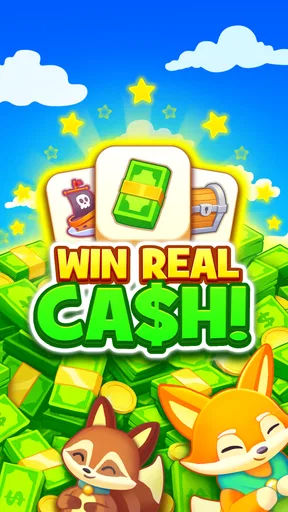

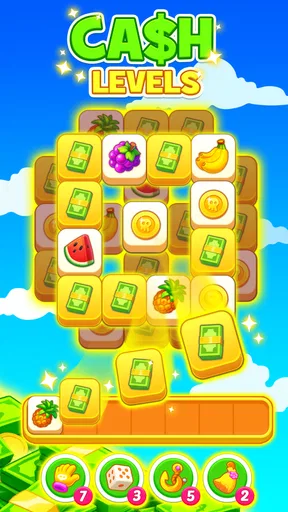

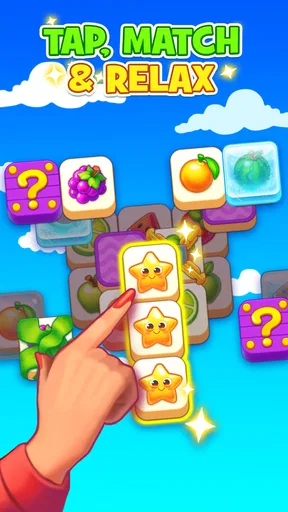
 Analysis by AppCompare
I approached Treasure Tiles: Win Cash as a puzzle game first, not as a promise of easy income. Its central appeal is the combination of tile-based play with real-money game positioning, and that changes the way every round feels. A normal puzzle title asks me to beat my previous score or clear a difficult stage. This one adds the idea that performance may have a financial angle, so patience and careful reading matter more than simply tapping quickly.
That distinction is important before installing it. Treasure Tiles: Win Cash is free to download, but it includes in-app purchases ranging from $1.99 to $9.99 per item. It is also marked for mature audiences aged 17 and over. I would not recommend treating it like a harmless children’s matching game or like a dependable side income. I see it as a casual puzzle experience with a money-oriented theme, best approached with a fixed entertainment budget and realistic expectations.
Why the money-focused puzzle format changes the experience
The game comes from Bear Hug Entertainment Limited and sits in the puzzle category. Its store summary presents it as a real-money game, while the short description identifies the Treasure Tiles concept. In practical terms, that framing gives ordinary tile decisions more weight. When I play a standard puzzle, a poor move is usually just a missed opportunity for a higher score. Here, the same kind of mistake can feel more frustrating because the surrounding presentation encourages me to think about rewards.
The strongest capability to focus on is this puzzle-to-reward connection. It does not automatically make the underlying play deeper, but it does make my decision-making more deliberate. I found myself checking the board before committing, looking for the move that preserved future options instead of chasing the most obvious short-term match. That is a useful change for players who enjoy planning, although it can also make a simple casual session feel more pressurized.
I would describe the game as better suited to short bursts than to long, uninterrupted sessions. Tile puzzles are naturally easy to pick up while waiting for an appointment, taking a break, or relaxing at the end of the day. The cash-oriented angle gives those small sessions a clearer purpose, but it also means I would avoid playing when tired or distracted. A rushed move is rarely improved by the thought that something valuable might be attached to the result.
What I would clarify before spending anything
The free entry point is helpful because it lets me decide whether the puzzle loop itself is enjoyable before paying. I would use that opportunity fully. I would not purchase an item simply because a round went badly, and I would not assume that an in-app purchase guarantees a return. The listed purchase range is enough to make impulse spending a realistic concern, particularly when several small purchases seem easier to justify than one larger expense.
My practical rule would be simple: play without spending first, decide whether the board decisions are fun on their own, and set a personal limit before considering any purchase. That approach protects the main benefit of the game, which is casual puzzle entertainment, without allowing the reward theme to dictate my behavior.
Worth Reading Before You Choose

EA SPORTS FC Mobile 26 Is a Bigger Football Game, but It Takes Time

Flipboard Shows What News Apps Must Do Beyond the Feed

Switching to Android Auto Means Rethinking Your Driving Routine

Google Calendar Makes a Crowded Week Easier to Manage

Ludo King Makes the Most of the Minutes Between Plans

Baby Panda World Brings Quick Play to Modern Phones, but Its Game Library Feels Busy
How the tile play works in practice
The appeal of a tile puzzle comes from the tension between an immediate move and the board that move leaves behind. I found the most useful mindset was to treat each turn as preparation for the next one. Instead of selecting the first available combination, I would scan for moves that opened space, preserved useful tiles, or avoided creating an awkward cluster. This kind of planning is more valuable than speed, especially when the reward framing makes careless play tempting.
One non-obvious habit I recommend is to pause after every major board change. A new arrangement can make the move that looked best a moment ago completely irrelevant. Players who keep tapping from memory may miss a better option that appears after tiles shift. A short visual reset helps me separate what I expected to happen from what is actually on the screen.
I also found that the game is easier to enjoy when I divide a session into two goals. The first is the puzzle goal: make sensible choices and understand the board. The second is the reward goal: consider whether the result has any financial relevance. Keeping those goals separate prevents me from making a bad puzzle move simply because I am thinking too intensely about the possible payoff.
That separation answers a question many new players will have: should the game be played for the puzzle or for the money? In my view, the puzzle has to come first. If the board itself is not satisfying, the reward angle will not fix the experience. If the puzzle is enjoyable, the extra incentive can make short sessions feel more engaging without becoming the only reason to open the app.
A realistic everyday session
Imagine having ten minutes before a train arrives. I would open the game, play with a clear stopping point, and focus on making controlled tile choices rather than trying to force a result. If a round became frustrating, I would stop instead of immediately buying something to recover the feeling of progress. That is where the game fits best for me: a compact distraction that rewards attention, not a task that deserves hours of concentrated effort.
The same approach works during a lunch break, but I would be more cautious if I were already stressed. Money-related mechanics can make a small loss feel larger than it really is. A regular puzzle game may be the better choice when I want a completely pressure-free break. Treasure Tiles: Win Cash is more appropriate when I actively want the added tension of a reward-oriented format.
Another useful routine is to decide in advance whether the session is exploratory or competitive. During an exploratory session, I test the puzzle rhythm and learn which decisions feel comfortable. During a competitive session, I pay closer attention to board management and stop when my concentration drops. Mixing those moods can lead to unnecessary spending or frustration because I may expect a relaxed round to produce a high-quality result.
The tradeoffs behind the reward angle
The obvious advantage is motivation. A player who has grown tired of ordinary score chasing may find the money-focused presentation more compelling. The game gives tile decisions a stronger sense of consequence, and that can make a short session feel more memorable. It is also accessible as a free game, so curious players can try the core experience before deciding whether it belongs in their regular rotation.
The main drawback is expectation management. The phrase “win cash” can encourage people to think about earnings before they have decided whether they even like the puzzle. I consider that backwards. A game should be judged by the quality of its interaction, clarity, and enjoyment before any reward enters the discussion. I would be especially careful not to describe it to friends as a way to make money. I would describe it as a puzzle game with a real-money focus.
There is also a psychological tradeoff between careful play and emotional play. The reward theme can encourage concentration, but it can also make losses feel personal. When I notice myself chasing a previous result, tapping too quickly, or considering a purchase only because I am annoyed, that is a sign to close the game. The ability to stop is more important here than squeezing one more round from a session.
Compared with a conventional tile puzzle, this title offers a stronger incentive structure but less emotional distance from the outcome. A traditional alternative is better for relaxing, practicing patterns, or playing with no financial associations. A standard competitive puzzle is also preferable if I want leaderboards or personal improvement to remain the only measure of success. Treasure Tiles: Win Cash makes more sense for someone who specifically likes the added reward context and can keep it under control.
Where the free model deserves attention
Free installation lowers the barrier to trying the game, but it does not remove the need for discipline. The presence of purchases means I would check my own habits before playing. If I tend to spend impulsively in games, I would either avoid purchases entirely or choose a different puzzle title without this type of incentive. The listed purchase range is not enormous in isolation, yet repeated small transactions can still affect a budget.
I would also keep the mature age rating in mind when deciding who can use it. This is not a title I would hand to a young child simply because it uses familiar tile-puzzle ideas. The reward-oriented presentation and purchase system make adult supervision and age awareness more relevant than they would be in a purely offline matching game.
For device compatibility, the game supports operating systems starting with version 9, and the current version is 5.0. That makes checking the phone or tablet’s software version a sensible first step before troubleshooting anything else. I would also keep the app updated when possible, since the current release is the version intended for present use. Those details are small, but they prevent an avoidable installation problem.
Who is most likely to enjoy it
The best audience is someone who already likes tile puzzles and wants a higher-stakes framing for short sessions. I would recommend it to a player who can enjoy the board without assuming every round must produce a financial result. That person will get the most from the combination of familiar puzzle thinking and the extra motivation supplied by the reward theme.
It may also suit players who struggle to stay interested in ordinary score-based games. The possibility of a reward can give them a reason to examine moves more carefully. However, that benefit depends on self-control. If the money angle becomes the only source of excitement, the puzzle may start to feel like an obstacle rather than the game itself.
I would be more hesitant to recommend it to anyone seeking reliable income, guaranteed returns, or a completely calm way to pass time. It is not the right substitute for work, budgeting, or a no-pressure relaxation app. It is also a poor match for people who dislike in-app purchases or who find reward-based mechanics distracting. For those players, a conventional free tile game will probably feel cleaner and more comfortable.
What the audience response suggests
The game has an average rating of 4.6 from around 91 thousand ratings, with roughly 7.3 thousand written reviews and over one million installs. Those figures show that it has attracted a substantial audience and that many players respond positively to the concept. I still would not treat popularity as proof that it will suit every player. The important question is whether the combination of puzzle play and money-focused motivation matches my own habits.
For a first-time player, I would use the early sessions as a test rather than a commitment. Do I enjoy examining the tiles when no purchase is involved? Can I stop after a planned amount of time? Do I remain comfortable when a result is disappointing? If the answer to those questions is yes, the game has a fair chance of becoming an entertaining casual option. If not, a normal puzzle alternative is likely the wiser choice.
My recommendation after weighing the experience
Treasure Tiles: Win Cash works best when I treat it as a puzzle game with an additional incentive, not as an income tool disguised as entertainment. Its central capability—the connection between tile decisions and real-money positioning—can make familiar play feel more purposeful. It can also introduce pressure that would not exist in a standard puzzle, so the same feature is both its main attraction and its main limitation.
I like the free starting point because it lets players judge the puzzle before spending. My strongest advice is to make that judgment honestly. Play slowly enough to understand the board, use short sessions, avoid chasing losses, and set a spending boundary before any purchase becomes tempting. Those habits make the experience more manageable and reveal whether the underlying gameplay is strong enough for personal use.
With a 4.6 average and a large installed audience, the game clearly has broad appeal. Still, I would recommend it selectively. Choose it if you enjoy tile puzzles, appreciate extra motivation, and can keep rewards in perspective. Skip it in favor of a traditional puzzle game if you want pure relaxation, guaranteed value, or a completely separate relationship with money. The smartest way to approach Treasure Tiles: Win Cash is to protect the puzzle experience first and treat every reward as secondary.
Pros
- Simple tile-matching gameplay is easy to learn and play casually.
- Short rounds make it convenient for quick breaks.
- Bright visuals and satisfying effects make matches feel rewarding.
- Progression gives players a reason to return regularly.
- Runs smoothly on many modern Android and iOS devices.
Cons
- Cash rewards may require significant time or effort to accumulate.
- Withdrawal eligibility and methods can vary by region.
- Ads may interrupt gameplay or appear frequently between rounds.
- Some features may depend on an active internet connection.
- Results and rewards can feel repetitive after extended play.
FAQs for Treasure Tiles: Win Cash
What is Treasure Tiles: Win Cash?
Treasure Tiles: Win Cash is a casual tile-matching puzzle game built around short levels, rewards, and a treasure-themed progression system. Players generally complete matching challenges, clear objectives, and collect in-game prizes while advancing through stages. Although the title highlights cash rewards, the exact earning options, eligibility rules, and available features may vary by location, device, account status, and current app version.
Can you really win real money with Treasure Tiles: Win Cash?
The game may promote opportunities to earn cash or redeemable rewards, but players should not assume that every reward can be withdrawn as real money. Cash-out availability usually depends on meeting specific requirements, such as reaching a minimum balance, completing verification, using an eligible payment method, or living in a supported country. Always read the app’s withdrawal terms and user feedback before investing significant time.
Is Treasure Tiles: Win Cash free to download and play?
Treasure Tiles: Win Cash can generally be downloaded without an upfront purchase, allowing users to try the core puzzle gameplay at no initial cost. However, free-to-play games may include advertisements, optional purchases, time limits, or reward-related restrictions. Check the store listing for current information about ads, in-app purchases, permissions, and whether any features require payment before downloading.
How does the gameplay work?
The main experience centers on completing tile-based puzzles, usually by matching or combining similar pieces to fulfill level objectives. As you progress, the game may introduce new layouts, limited moves, boosters, bonuses, or treasure rewards. The controls are typically simple and suitable for short sessions, but later stages can become more challenging and may encourage watching advertisements or waiting for additional attempts.
Is Treasure Tiles: Win Cash safe to install?
Before installing, download Treasure Tiles: Win Cash only from an official Google Play or Apple App Store listing, and confirm the developer name, ratings, recent reviews, and requested permissions. Avoid unofficial APK files or websites promising unlimited cash. Since reward-based apps can collect usage or advertising data, review the privacy policy and consider whether the permissions and account information requested are appropriate for a puzzle game.


